
We help growing ecommerce and operationally complex businesses connect their commerce, data, automation, and customer workflows — so growth doesn't create operational chaos.
We focus on the three system failures that quietly drain revenue, slow teams down, and make scaling harder than it should be.
A lead sits in an inbox for six hours before anyone replies.
Revenue impact: Lower costs, faster execution
Shopify → ERP → Inventory → Warehouse → WhatsApp — one broken link and a sales spike becomes a support fire.
Result: Growth without breakdowns
Your CRM, ERP, and accounting tool each have their own version of the truth.
Outcome: Better decisions, fewer surprises
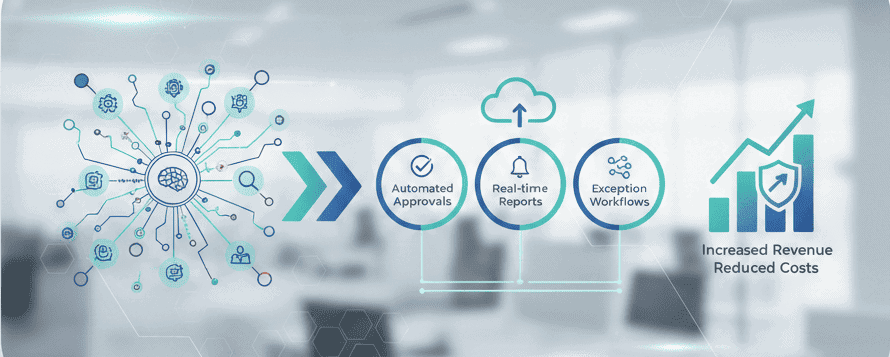
Every manual handoff slows execution, introduces errors, and delays decisions. As volume grows, this cost compounds.
Revenue impact: Lower operating costs and faster execution
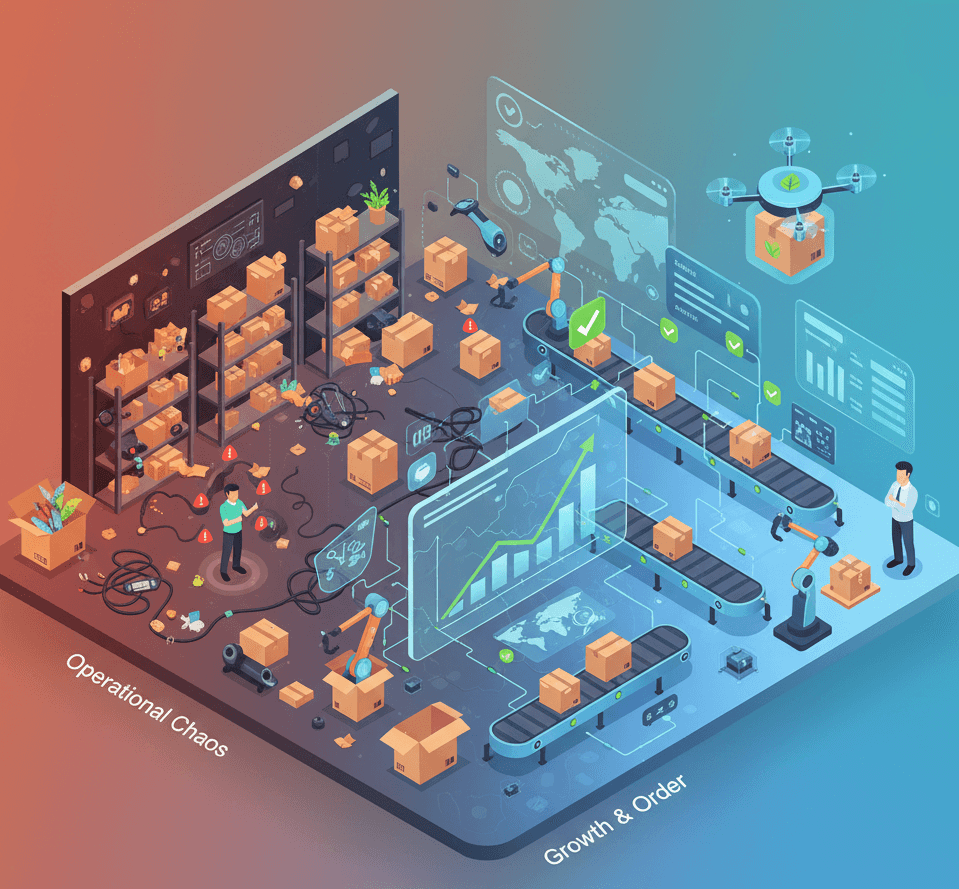
Shopify → ERP → Inventory → Warehouse → WhatsApp. That's the real chain behind a single sale. If even one link is manual — someone re-keying the order into the ERP, checking stock in a spreadsheet, texting the warehouse to pack it — a sales spike turns into a support fire.
Revenue impact: More orders without more headcount
A new order in your CRM should trigger an invoice in your accounting tool, an update in your ERP, and a Slack alert to the right team — without anyone copying data between screens.
We build n8n and API-based workflows that connect the specific tools you already run — CRM, ERP, accounting, support inbox — so information moves on its own.
Revenue impact: Faster operations and lower overhead
If a sale, a shipment, or a support ticket depends on someone manually checking three different tools, we're probably a good fit.
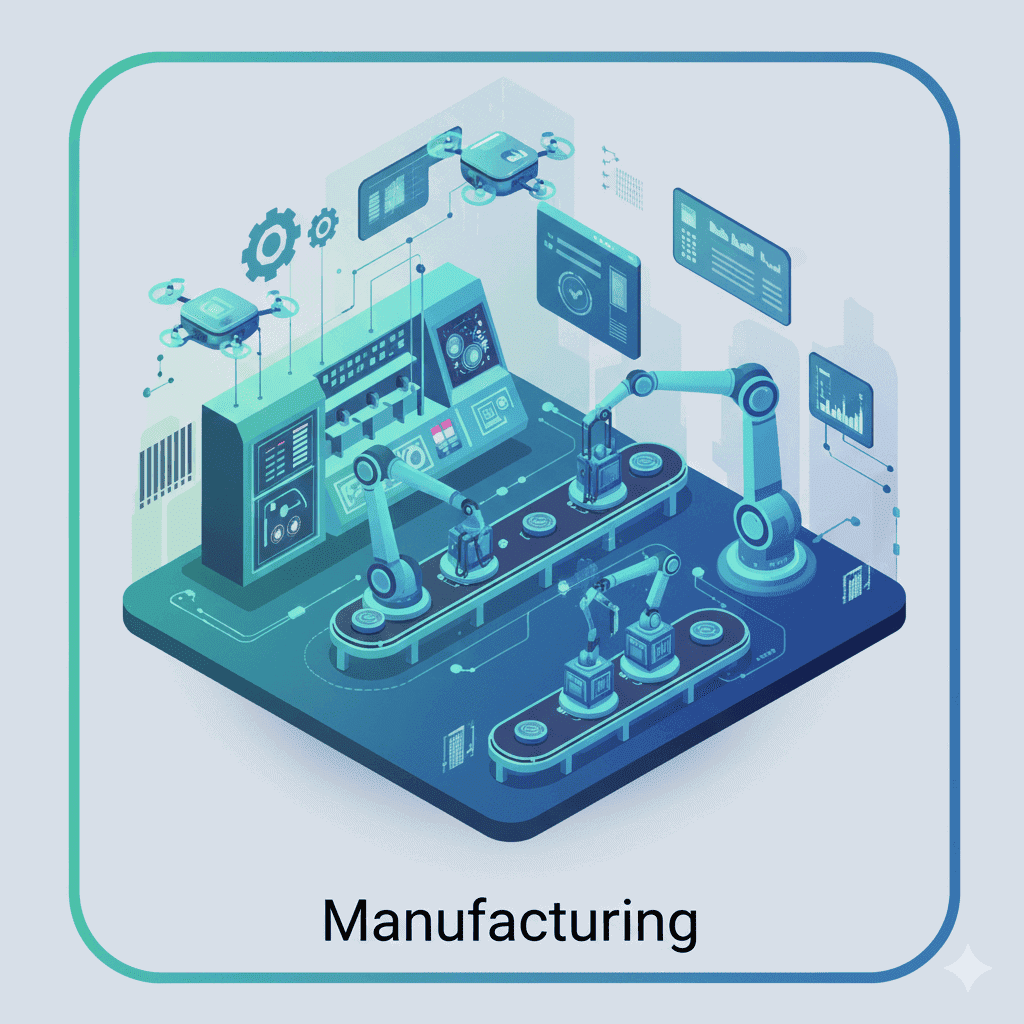
Regain control over inventory and predict costs with confidence across plants and warehouses.

Scale revenue without breaking operations, from fulfillment to complex inventory returns.
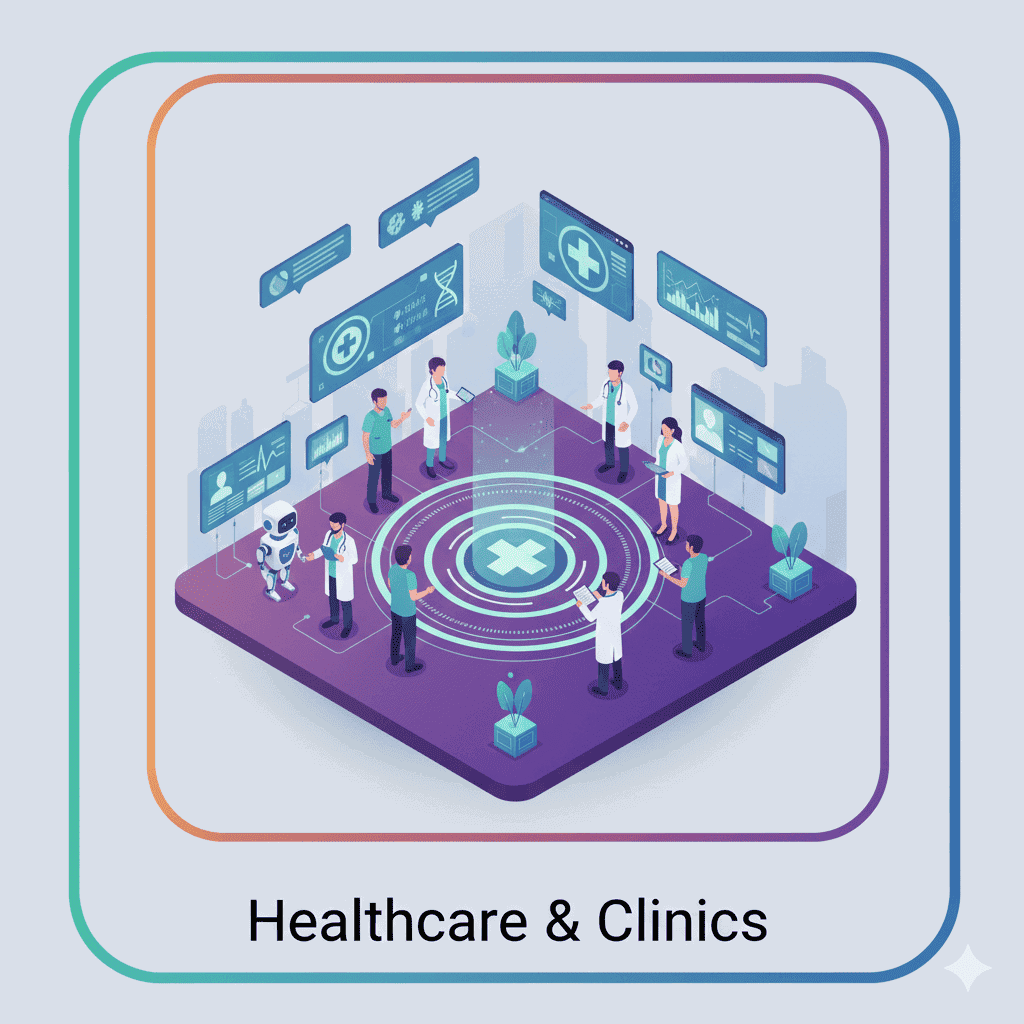
Reduce risk and improve visibility with systems built for compliance and operational discipline.
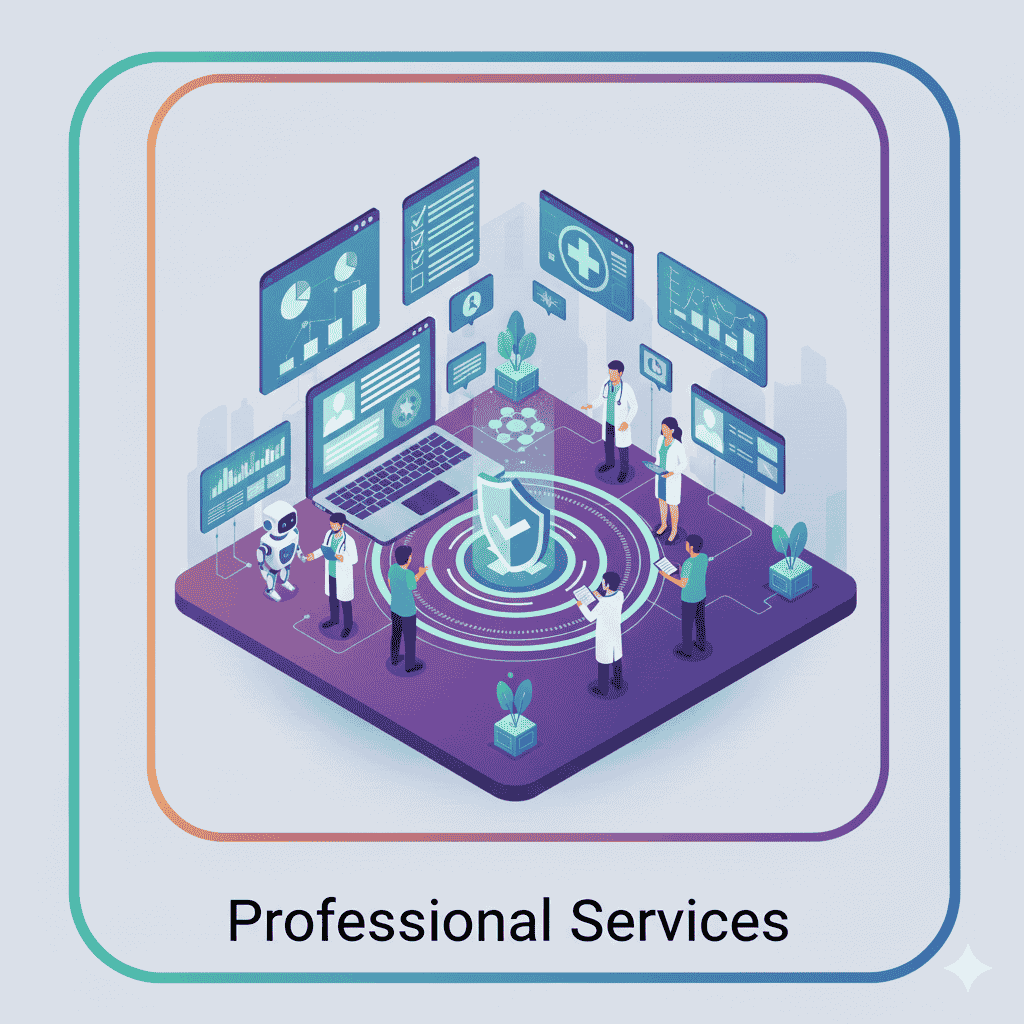
Gain clarity across teams and engagements with unified project tracking and billing.
These outcomes are based on real client engagements. Results vary depending on system maturity, data quality, and implementation scope.
Reduction in manual errors and rework, freeing teams to focus on higher-value work.
Improvement in process efficiency across operations and fulfillment.
Inventory and data accuracy, enabling confident planning.
Typical timeline to reach visible operational improvements.
* Results shown are typical ranges observed across multiple client implementations. Exact outcomes depend on business size, process maturity, data quality, and execution discipline.
These are not hypothetical examples. Each case reflects common operational challenges and the measurable improvements achieved after system alignment.
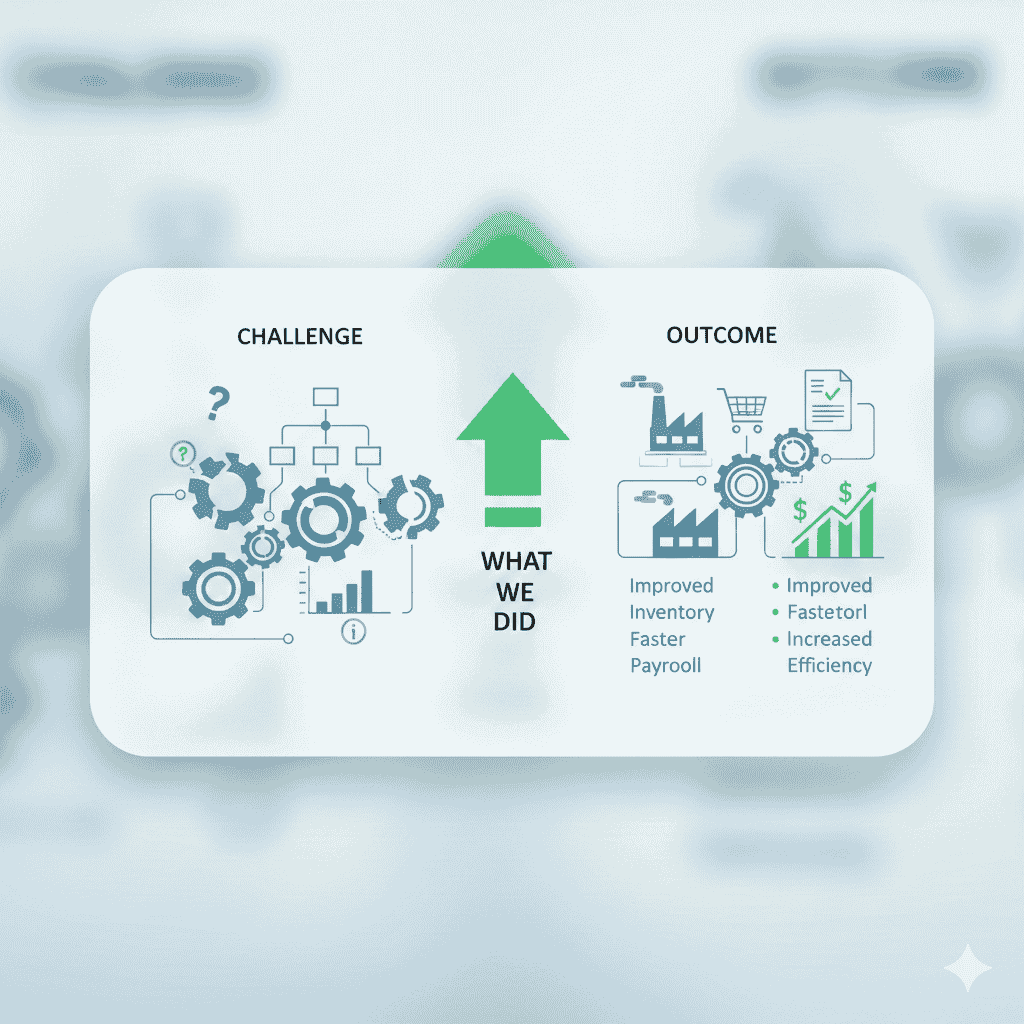
Challenge: Agents losing leads due to slow response times outside of business hours.
What we did: Deployed a custom AI Voice & Chat Agent to qualify leads and book viewings 24/7.
Outcome: Lead conversion increased by 35% with zero manual intervention.
View Case Study →Challenge: Legacy portal was slow, confusing for users, and had high bounce rates.
What we did: Built a high-performance React-based dashboard with real-time data syncing.
Outcome: User engagement rose by 60% and page load speeds dropped under 1.2s.
View Case Study →Challenge: High traffic during sales caused site crashes and overselling of stock.
What we did: Optimized Shopify architecture and automated real-time inventory buffers.
Outcome: Handled 5,000+ concurrent users with zero downtime during peak season.
View Case Study →This is not a “build-first” approach. Every step exists to reduce risk, control change, and deliver improvements you can trust.
We first understand how your systems actually work today — where data breaks, manual effort creeps in, and decisions slow down.
Your gain: Clear visibility into what’s broken and why
We design workflows, integrations, and controls aligned with how your teams operate and how leadership makes decisions.
Your gain: Predictable execution with fewer surprises
Changes are introduced in controlled phases, prioritizing high-impact areas while keeping daily operations stable.
Your gain: Early results without operational disruption
After go-live, we fine-tune workflows, support your team, and ensure the system becomes part of daily operations.
Your gain: Long-term stability and confidence
We don’t chase trends or experimental tools. Every technology we use is selected for stability, scalability, and long-term support.

Why it matters: Reliable platforms with strong ecosystems.
Why it matters: Systems that perform under real-world load.

Why it matters: Interfaces that are fast and easy to maintain.

Why it matters: Less manual work and faster execution.

Why it matters: Lower risk and better data protection.

Why it matters: Safe updates and long-term stability.
Real feedback on what happens when manual work and uncertainty are removed.

“We didn’t realize how much time we were losing until we saw everything in one system. Earlier, decisions were based on assumptions. Now, we actually trust the numbers.”
“Our biggest fear was disruption. Sales were growing, but fulfillment was under pressure. The work brought stability without forcing us to pause operations.”

“We had tried improving reporting earlier, but it never stuck. This time, the difference was structure. The system didn’t just go live — it kept getting better.”

“Moving our saree and lehenga business online was a big step for us. The new system made the transition simple and helped us reach customers beyond our local market.”

“Our customers always knew us locally, but we wanted our store to be just as accessible online. We never imagined our local store could reach so many customers. Going online gave us a whole new way to grow.”



Every engagement is scoped individually — but you shouldn't have to get on a call just to know if we're in the same ballpark. Here's what most projects look like, plainly.
Single-workflow automation, API integrations, WhatsApp bots, or AI chatbot deployment.
Typical starting range
A clean, professional Shopify, WooCommerce, or BigCommerce store — theme setup, catalog, and payment/shipping configuration.
Typical starting range
Custom Shopify, Magento, or WooCommerce builds with business system integration and automated operational workflows.
Typical starting range
High-complexity builds — B2B pricing logic, multi-warehouse inventory, ERP-integrated order flows, or multi-country/multi-currency setups.
Typical starting range
Full operational overhaul — multiple systems, teams, and integrations working as a unified engine.
Custom scoped — quoted after audit
Two businesses asking for "the same thing" can land at very different numbers. Here's the honest breakdown — so you walk into a call knowing what to expect.
Number of integrations
Each system connected adds scope and build time
Age of existing systems
Legacy infrastructure is harder and slower to work around
Custom business logic
Industry-specific rules and workflows extend development
Timeline pressure
Compressed delivery needs more resources in parallel
We adapt the billing model to the project — not the other way around.
Defined scope, defined price. No surprises mid-build. Works best when requirements are clear from the start.
Pay as phases complete. Built-in checkpoints and better cashflow control. Common for larger builds.
Ongoing development, optimization, and support. For businesses where tech is a continuous operation, not a one-time project.
In 30 minutes we'll scope your problem, tell you what's actually worth building, and give you a real number — not a "depends" non-answer.
We’ve answered these questions honestly — using the data from our structured schema to ensure consistency.

No. Changes are introduced gradually and designed to fit around existing operations, allowing most clients to continue business as usual.
Most clients see visible improvements within 6 to 10 weeks, focusing first on reducing confusion, delays, and manual work.
No. Existing systems are retained where possible. Only parts that clearly limit operations or visibility are changed.
Client involvement is focused and limited to key stakeholders, minimizing disruption to daily responsibilities.
Yes. Post-launch support ensures systems stabilize properly and continue improving as the business grows.