
The Ultimate Guide to ERPNext Implementation: Everything You Need to Succeed
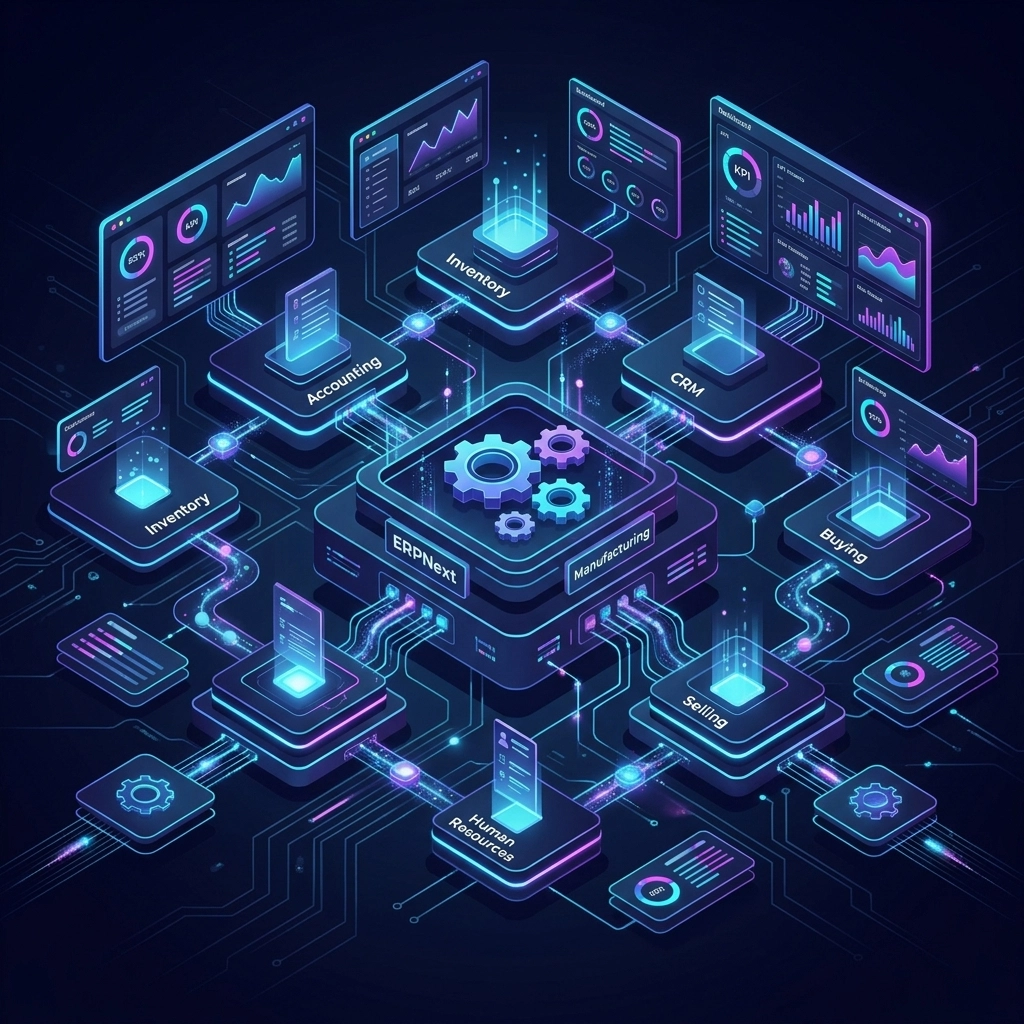
Growth is a double-edged sword. As operations scale, the manual processes that once sufficed: spreadsheets, disparate software, and verbal hand-offs: inevitably break. This operational fragmentation creates "data silos," where inventory doesn't match sales, finance can't reconcile invoices, and procurement operates on guesswork.
For enterprises and high-growth SMEs in India and globally, ERPNext has emerged as the definitive solution to these systemic failures. As a versatile, open-source ERP, it provides a unified architecture for accounting, HR, manufacturing, and sales. However, software alone is not a silver bullet. Successful deployment requires a rigorous, engineered approach to implementation.
At Unwavering Technology, we don't just "install" software; we architect business systems that drive measurable outcomes, such as a 30% improvement in process efficiency and significant reductions in manual data entry errors.
The Cost of Fragmented Systems
When inventory and fulfillment are disconnected, every sale creates chaos rather than revenue. Organizations often struggle with:
- Inventory Inaccuracy: Overstocking or stockouts due to lack of real-time visibility.
- Manual Reporting: Finance teams spending days consolidating data instead of analyzing it.
- Process Bottlenecks: Approvals trapped in email chains rather than automated workflows.
Overcoming these hurdles requires a shift from "app-patching" to a unified ERP strategy.
Phase 1: Planning and Strategic Discovery
A failed ERP implementation usually begins with a lack of clarity. Before a single line of code is configured, we conduct a deep-dive audit into your current business processes.
Defining Key Performance Indicators (KPIs)
Implementation success is measured by business impact. We help organizations define clear metrics, such as:
- Reduction in order-to-delivery lead times.
- Increase in financial reporting accuracy.
- Lowering of operational overhead through automated daily workflows.
Business Process Mapping
We map every workflow: from purchasing to payroll: comparing current "as-is" processes with the "to-be" state within ERPNext. This gap analysis identifies where custom modules or AI-driven integrations are necessary. As a premier ai development company india, we often identify opportunities to layer intelligent automation over standard ERP functions, such as predictive procurement or automated customer sentiment analysis.

Phase 2: Core Module Configuration
ERPNext is modular by design, allowing for a phased rollout that minimizes business disruption. We prioritize core pillars that stabilize the organization’s foundation.
Accounting and Finance
The Chart of Accounts is the backbone of the system. We configure cost centers, tax rules, and automated approval workflows for expenses. This ensures that every transaction: whether a retail sale or a wholesale purchase: is instantly reflected in the general ledger.
Sales and CRM
We implement a structured "Lead-to-Payment" cycle. By connecting CRM data directly to sales orders and invoicing, sales teams gain 360-degree visibility into customer history without switching platforms. For businesses looking to scale their digital presence, our expertise as an ecommerce development company india ensures that these sales flows are perfectly synchronized with web storefronts.
Inventory and Manufacturing
For the manufacturing sector, we configure complex Bills of Materials (BOM), production planning tools, and material requests. Real-time inventory tracking ensures that "Work in Progress" (WIP) is accounted for, preventing capital from being tied up in stagnant stock.
Phase 3: Data Migration and Cleansing
Moving "dirty" data into a new ERP is a recipe for failure. This phase focuses on the extraction, cleansing, and mapping of legacy data.
- Audit and Purge: Remove duplicate records and obsolete product SKUs.
- Field Mapping: Align legacy data formats with ERPNext’s document structures.
- Validation: Conduct trial imports to ensure data integrity before the final cutover.
Clean data allows for the implementation of advanced tools like WhatsApp AI bots, which can query the ERP for real-time order status updates for customers.

Phase 4: eCommerce Integration and Customization
In 2026, an ERP cannot exist in isolation. It must be the "Source of Truth" for your entire digital ecosystem.
Connecting Shopify, Magento, and WooCommerce
Many of our clients operate high-volume online stores. As a specialized shopify development company, we build robust connectors between Shopify and ERPNext. This ensures that:
- Online orders automatically generate Sales Orders in ERPNext.
- Inventory levels on the website update instantly after a warehouse sale.
- Customer data is synchronized for personalized marketing.
For more complex migrations, such as moving from WooCommerce to Shopify, we ensure the ERP remains the stable anchor throughout the transition.
Custom Workflow Orchestration
Standard ERP features often fall short of specific industry requirements. We leverage n8n, Zapier, and custom Python scripts to build bespoke workflows. Whether it's a custom Laravel matchmaking app for professional services or a specialized logistics dashboard, we extend ERPNext to fit your unique operational DNA.
Phase 5: Training and User Adoption
The greatest technical system will fail if the staff does not use it. Resistance to change is the primary cause of ERP abandonment.
We mitigate this through:
- Role-Based Training: Finance teams learn accounting; warehouse staff learn stock entries. No one is overwhelmed with irrelevant features.
- Standard Operating Procedures (SOPs): We create documented guides and video walkthroughs tailored to your specific configuration.
- Super-User Development: We train internal champions who can provide immediate, first-line support to their colleagues.
Phase 6: Go-Live and Continuous Improvement
The "Go-Live" is not the end of the journey; it is the beginning of a new operational standard.
Post-Launch Monitoring
During the first 30 days post-launch, we monitor system performance and user feedback closely. We ensure that the data flowing from your AI agents and eCommerce platforms is being processed correctly.
AI and Automation Layering
Once the core ERP is stable, we look toward optimization. As a forward-thinking ai development company india, we help you deploy AI shopping agents that can check ERP inventory levels or automate supplier negotiations based on historical pricing data.

Implementation Timelines: What to Expect
The duration of an ERPNext rollout depends on the complexity and scale of the organization:
- Small Business (Single Site): 3–4 months. Focuses on core accounting and basic inventory.
- Medium Enterprise (Multi-Department): 6–8 months. Includes multi-channel eCommerce integration and custom workflows.
- Large Enterprise (Global/Manufacturing): 9–12 months. Requires deep customization, API integrations, and extensive data migration.
Why Unwavering Technology?
Implementing an ERP is a high-stakes investment. You need a partner who understands the intersection of enterprise resource planning and modern digital growth.
We bring a systems-thinking approach to every project. Whether we are acting as your shopify development company to streamline your storefront or your ai development company india to automate your back-office, our goal remains the same: operational excellence.
Our experience across retail, manufacturing, and professional services ensures that we anticipate roadblocks before they disrupt your business.

Ready to Streamline Your Operations?
Stop fighting with fragmented data and start scaling with confidence. ERPNext, when implemented correctly, becomes the engine of your business growth.
Contact Unwavering Technology today to schedule a consultation and discover how we can engineer a custom ERPNext solution for your enterprise.
Leave a Reply