
The Ultimate Guide to ERPNext Implementation in India: Everything You Need to Succeed
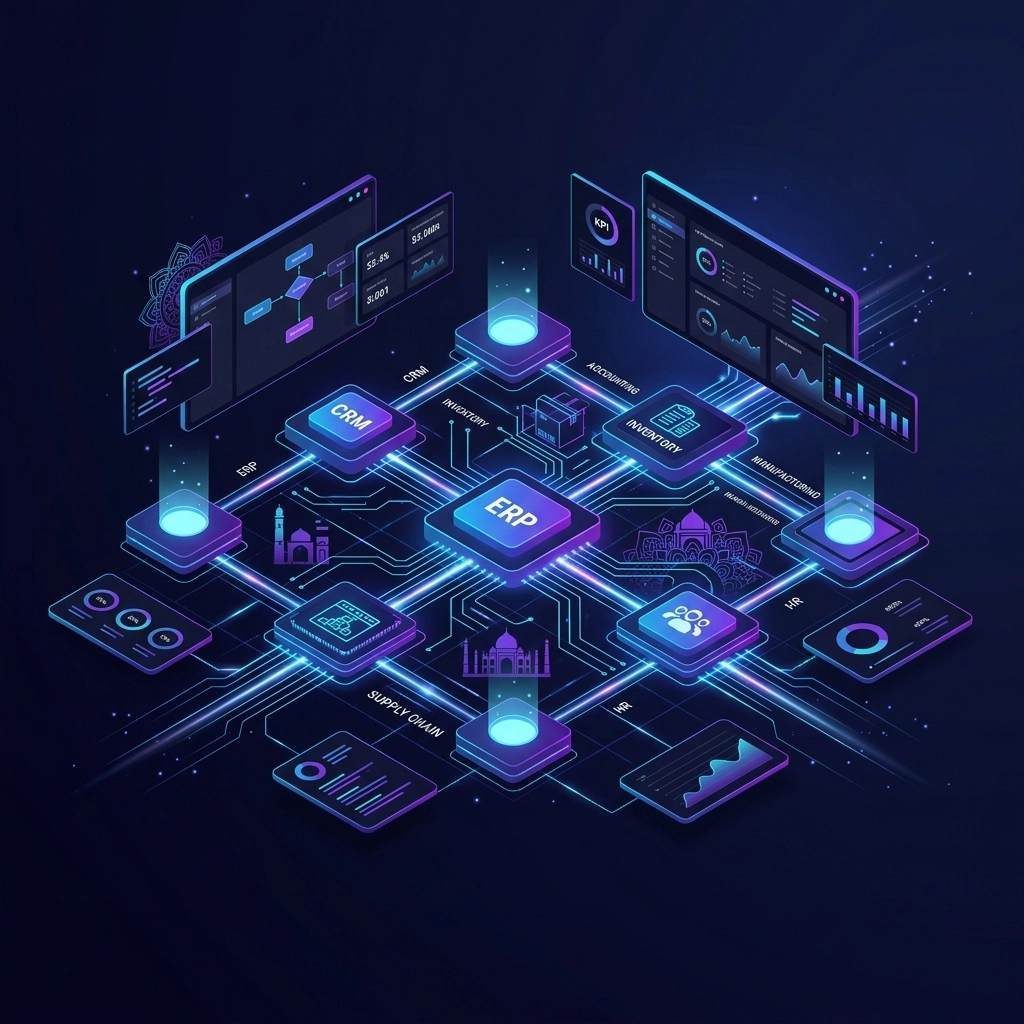
Operational friction is the silent killer of scaling enterprises. For many Indian businesses, growth brings a chaotic reality: sales teams using spreadsheets, finance teams locked in Tally, and warehouse managers relying on memory. When these systems don’t talk, orders get delayed, stock goes missing, and compliance becomes a quarterly nightmare.
ERPNext has emerged as the definitive solution for Indian SMEs and large-scale enterprises looking to unify their operations without the predatory per-user licensing fees of legacy systems. However, a successful deployment isn't about software installation; it’s about engineering a system that mirrors your unique business logic.
As a premier ai development company india, Unwavering Technology specializes in moving businesses from fragmented manual processes to automated, high-visibility ecosystems. This guide outlines the strategic blueprint for a successful ERPNext implementation in the Indian market.
Why Legacy Systems Fail the Modern Indian Enterprise
Most Indian businesses hit a "system ceiling" when they reach a certain volume of transactions. Legacy accounting software often lacks the robust inventory tracking, manufacturing resource planning (MRP), and CRM capabilities required to compete in a digital-first economy.
When inventory and fulfillment aren't connected, more sales create more chaos. You face:
- Data Silos: Finance has no real-time visibility into procurement costs.
- Compliance Risks: Manual GST filing leads to reconciliation errors and penalties.
- Operational Lag: Information travels via phone calls and WhatsApp messages instead of automated triggers.
ERPNext solves this by providing a single source of truth. As a leading ecommerce development company india, we have seen how integrating a robust ERP with front-end sales channels transforms operational stability from a hope into a measurable metric.
The 5-Phase Implementation Blueprint
Successful implementation requires a structured approach. At Unwavering Technology, we follow a rigorous methodology to ensure 100% adoption and zero data loss.
Phase 1: Business Process Engineering (BPE)
We don't start with code; we start with your workflow. We map every process from "Lead-to-Cash" and "Procure-to-Pay." This phase identifies bottlenecks, such as manual approval cycles that delay production by days. By re-engineering these processes within ERPNext, we eliminate waste before the first module is even configured.
Phase 2: Configuration and Indian Compliance
ERPNext is globally powerful but locally sensitive. In India, the system must handle:
- GST & TDS: Automating GSTR-1, GSTR-3B, and TCS/TDS calculations.
- E-Invoicing: Direct API integration with the NIC portal for seamless IRN generation.
- Payroll: Statutory contributions like EPF, ESI, and Professional Tax configured specifically for Indian labor laws.

Caption: A streamlined ERPNext dashboard showing real-time GST liabilities and inventory health.
Phase 3: Data Migration and Integrity
The biggest risk in any ERP project is "garbage in, garbage out." We execute precise data cleaning and migration strategies, moving your historical records from Tally, Excel, or legacy CRMs. We prioritize data integrity, ensuring that opening balances, stock valuations, and customer ledgers are accurate to the decimal.
Phase 4: System Integration (The Force Multiplier)
An ERP should not be an island. To maximize ROI, we connect ERPNext to your entire tech stack:
- eCommerce Integration: We connect your ERP to Shopify, WooCommerce, or Magento. As an experienced shopify development company, we ensure that every sale on your website instantly updates inventory and triggers a warehouse packing slip.
- Customer Communication: Integrating WhatsApp AI Bots allows your customers to check order status or request invoices automatically, pulling real-time data from ERPNext.
- External APIs: Connecting with payment gateways, logistics partners (BlueDart, Delhivery), and bank feeds for automated reconciliation.
Phase 5: User Adoption and Training
Software is only as good as the people using it. We conduct role-based training sessions for your finance, sales, and warehouse teams. We focus on "The Why" as much as "The How," ensuring your staff understands how their data entry affects the company's bottom line.
Leveraging AI and Automation in ERPNext
In 2026, simply having an ERP is the baseline. To gain a competitive edge, you must leverage AI solutions. As a specialized ai development company india, we enhance standard ERPNext deployments with:
- Predictive Inventory: AI models that analyze historical sales data to predict stockouts before they happen, optimizing your working capital.
- Automated Data Capture: Using OCR to read physical purchase invoices and automatically enter them into the ERP, reducing manual entry errors by up to 90%.
- Smart Forecasting: Integrating ERP data with market trends to provide executive leadership with accurate revenue projections.

Solving the eCommerce Bottleneck
For retail and manufacturing brands, the gap between the online store and the warehouse is where profits leak. If you are working with an ecommerce development company india, ensure they understand the backend architecture.
Our ecommerce solutions focus on creating a unified "Order-to-Delivery" flow. When a customer buys a product, the ERP automatically:
- Reduces the stock across all channels (Amazon, Shopify, Physical Store).
- Generates a GST-compliant invoice.
- Assigns a shipping partner based on the pincode.
- Sends a WhatsApp confirmation via an automated bot.
This level of automation reduces manual intervention, allowing you to handle 10x the order volume with the same headcount.

Caption: Architecture diagram showing the integration between Shopify, ERPNext, and AI-driven automation layers.
Cost and Timeline: What to Expect in 2026
Implementation costs in India vary based on complexity, but a strategic deployment generally falls into these brackets:
- Standard SME Implementation: For trading or service companies needing core accounting, CRM, and HR. Timeline: 6–8 weeks.
- Manufacturing Excellence: Includes Multi-level Bill of Materials (BOM), Job Cards, and Quality Inspections. Timeline: 3–4 months.
- Enterprise Automation: Multi-company setups with complex AI solutions and deep third-party integrations. Timeline: 6+ months.
While the initial investment is higher than a simple accounting tool, the ROI is found in the elimination of stock leakages, reduced administrative overhead, and the ability to make data-driven decisions.
Why Unwavering Technology?
We don't just "install" ERPNext. We engineer business systems that drive growth. Our dual expertise as an ai development company india and a deep-tech systems integrator means we look at your business through a lens of total optimization.
We serve industries across the board:
- Manufacturing: Streamlining production cycles and raw material tracking.
- Retail & eCommerce: Bridging the gap between digital storefronts and physical fulfillment.
- Logistics & Supply Chain: Providing real-time visibility into moving assets.
- Professional Services: Managing project profitability and resource allocation.

Caption: Professional Services dashboard in ERPNext tracking project margins and billable hours.
Taking the First Step Toward Operational Excellence
If your current systems feel like they are holding you back, they probably are. Transitioning to ERPNext is a move toward a more scalable, transparent, and profitable future.
Stop managing your business through spreadsheets and fragmented apps. Let us build a purpose-built system that automates the mundane and highlights the critical.
Ready to streamline your operations?
Book a free consultation with our ERP specialists at Unwavering Technology to discuss your implementation roadmap. Let’s engineer your success together.
Leave a Reply