
95% of AI Projects Fail: 7 Mistakes You're Making with Business Automation (and How to Fix Them)
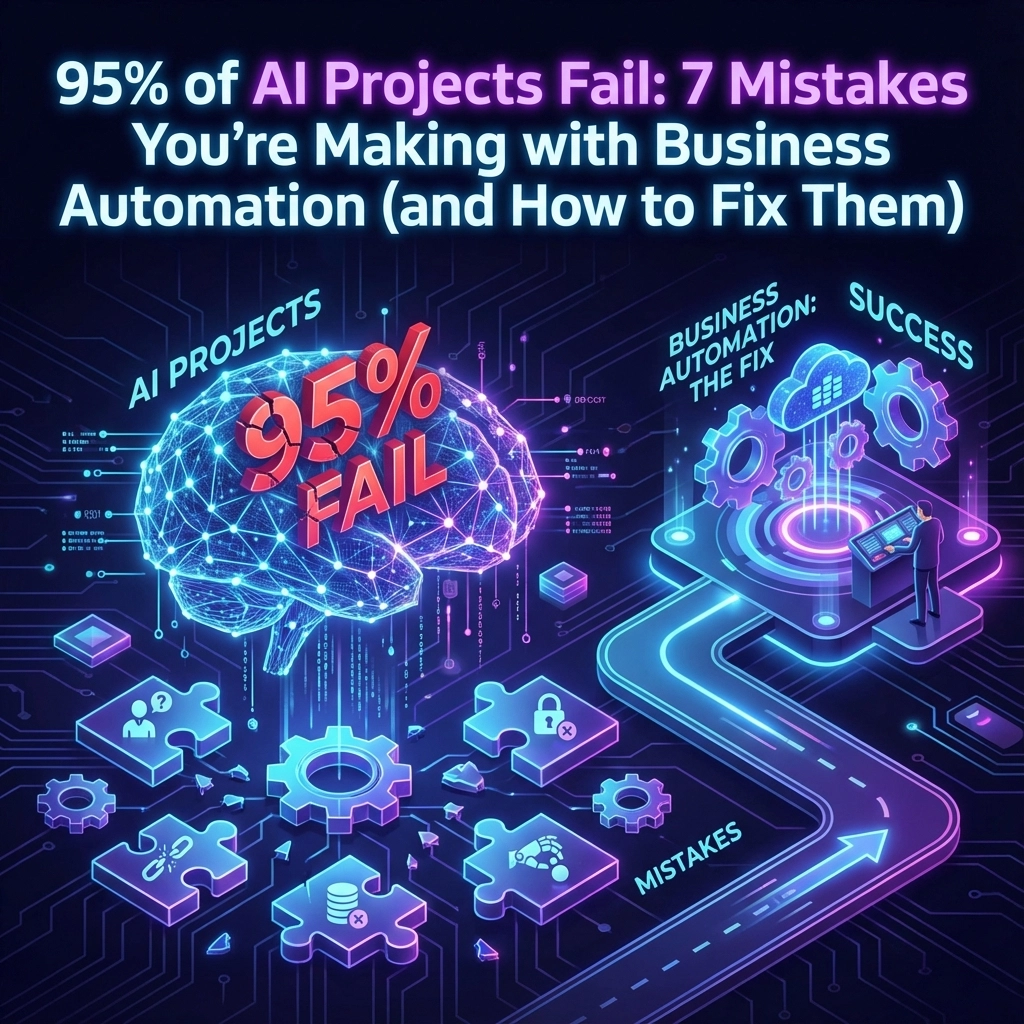
Enterprise organizations have invested over $30 billion in artificial intelligence initiatives over the past two years, yet MIT's 2025 State of AI in Business report reveals a shocking truth: 95% of these investments generate zero measurable business return. The problem isn't AI technology itself: it's how organizations approach implementation and deployment.
Understanding these critical failure points can transform your organization from another statistic into the elite 5% that achieves meaningful results. Here are the seven devastating mistakes that derail AI projects and proven strategies to avoid them.
Mistake #1: Building Static Systems That Never Learn
Most enterprise AI systems operate as rigid tools that remain frozen in time. They don't adapt to workflows, learn from user feedback, or evolve with changing business requirements. When employees encounter inflexible systems that can't handle real-world complexity, they abandon these tools within weeks.
The Fix: Select AI solutions designed for continuous learning and workflow integration. Successful systems adapt to organizational patterns, improve through user interactions, and evolve alongside business processes. Prioritize vendors who demonstrate adaptive capabilities rather than one-size-fits-all approaches.

Mistake #2: Treating AI as an IT Experiment Instead of Business Transformation
Organizations frequently delegate AI projects to IT departments as technical experiments rather than strategic business initiatives. Without C-suite sponsorship and cross-departmental authority, these projects struggle to secure resources, overcome resistance, or achieve meaningful adoption across the organization.
The Fix: Position AI initiatives as business transformation projects with dedicated executive champions. Successful deployments require line managers: not just central AI labs: to drive adoption throughout their departments. Executive sponsors must provide clear mandates, remove organizational barriers, and allocate sufficient resources for comprehensive implementation.
Mistake #3: Ignoring Data Quality Foundations
According to Gartner research, at least 30% of AI pilots fail due to poor data quality. Organizations rush to implement sophisticated models while ignoring fundamental data preparation requirements. Without clean, consistent, and well-governed data pipelines, even the most advanced AI systems produce unreliable results.
The Fix: Invest 60-80% of project resources in comprehensive data preparation before deploying AI models. This includes data cataloging, quality assessment, pipeline development, and governance frameworks. Establish data validation protocols and monitoring systems to maintain data integrity throughout the AI lifecycle.

Mistake #4: Underestimating Human Resistance and Cultural Barriers
Technical excellence means nothing if end-users don't trust or adopt AI systems. Fear of job displacement, lack of AI literacy, and entrenched workflows create persistent adoption barriers. Organizations that focus exclusively on technical capabilities while ignoring human factors consistently experience project failures.
The Fix: Address cultural resistance through comprehensive change management strategies. Provide extensive AI literacy training, communicate transparently about job impacts, and involve employees in system design processes. Build trust through gradual implementation, clear success metrics, and demonstrable value delivery.
Mistake #5: Relying on Generic Tools Without Enterprise Customization
Generic AI tools like ChatGPT excel for individual use cases but fail in enterprise environments because they don't integrate with specific workflows, systems, or business processes. Organizations expecting generic solutions to solve complex enterprise challenges consistently experience disappointment and project abandonment.
The Fix: Partner with specialized vendors who provide domain-specific solutions rather than building proprietary systems from scratch. Research shows that purchasing from specialized vendors succeeds 67% of the time, while internal builds succeed only 33% of the time. Focus on vendors who demonstrate deep industry expertise and proven integration capabilities.

Mistake #6: Setting Unrealistic Expectations for ROI Timeline
Organizations often expect transformative results within 3-6 months without acknowledging the complexity and time requirements of successful AI deployment. This expectation gap leads to premature project cancellations when systems don't deliver instant returns, despite following proper implementation processes.
The Fix: Plan for 12-18 month timelines to demonstrate measurable business value. Successful AI transformations require extensive preparation, gradual rollout, user training, and system optimization. Set realistic milestones, communicate timeline expectations to stakeholders, and resist pressure for immediate results that compromise long-term success.
Mistake #7: Lacking Domain Specificity and Strategic Focus
Projects that pursue flashy use cases without investing in fundamental requirements like observability, validation, and integration consistently fail. Organizations spread resources across multiple experimental initiatives rather than focusing on specific pain points with clear business value.
The Fix: Identify one critical business challenge and execute comprehensive solutions rather than pursuing broad, unfocused experiments. Successful organizations achieve dramatic results by selecting specific problems, understanding domain requirements, and delivering focused solutions that demonstrate clear value before expanding scope.

The Path to AI Success: A Strategic Framework
Organizations that achieve AI success follow systematic approaches that address each failure point methodically. They secure executive sponsorship, invest heavily in data foundations, select specialized vendor partners, and maintain realistic timelines for value delivery.
Start with Strategic Assessment: Evaluate current data quality, organizational readiness, and specific use cases that align with business objectives. Avoid the temptation to implement AI everywhere simultaneously.
Build Strong Foundations: Establish robust data pipelines, governance frameworks, and integration capabilities before deploying AI models. These foundational investments determine long-term success more than model sophistication.
Choose the Right Partners: Work with vendors who demonstrate domain expertise, proven integration capabilities, and adaptive learning systems rather than generic tools or internal development teams without AI specialization.
Plan for Cultural Transformation: Implement comprehensive change management strategies that address employee concerns, provide extensive training, and build trust through transparent communication and gradual value demonstration.
Why Most Organizations Get It Wrong
The 95% failure rate reflects systematic misunderstanding of AI implementation requirements rather than technology limitations. Organizations treat AI as software deployment rather than business transformation, leading to predictable failures across multiple dimensions.
Successful AI implementations require coordinated expertise across technology, data management, change management, and business strategy. Companies attempting to handle these requirements internally without specialized knowledge consistently encounter the seven mistakes outlined above.

Moving Forward: Your Next Steps
Transform your organization from the 95% failure group into the elite 5% that delivers measurable results by addressing these critical mistakes systematically. Begin with honest assessment of current capabilities, secure executive sponsorship for comprehensive transformation initiatives, and partner with specialized vendors who demonstrate proven success in your industry.
The organizations succeeding with AI share common characteristics: domain specificity, deep workflow integration, strong data foundations, and realistic timeline expectations. Rather than viewing the high failure rate as evidence that AI doesn't work, recognize it as confirmation that most organizations haven't addressed fundamental implementation requirements.
Your AI transformation success depends on avoiding these seven critical mistakes while building systematic capabilities that support long-term value delivery. The technology works: when implemented correctly with appropriate foundations, realistic expectations, and comprehensive change management strategies.
For organizations ready to implement AI solutions that deliver measurable business value, our AI solutions provide the domain expertise, integration capabilities, and strategic guidance necessary to join the successful 5% rather than the failing 95%.
Leave a Reply